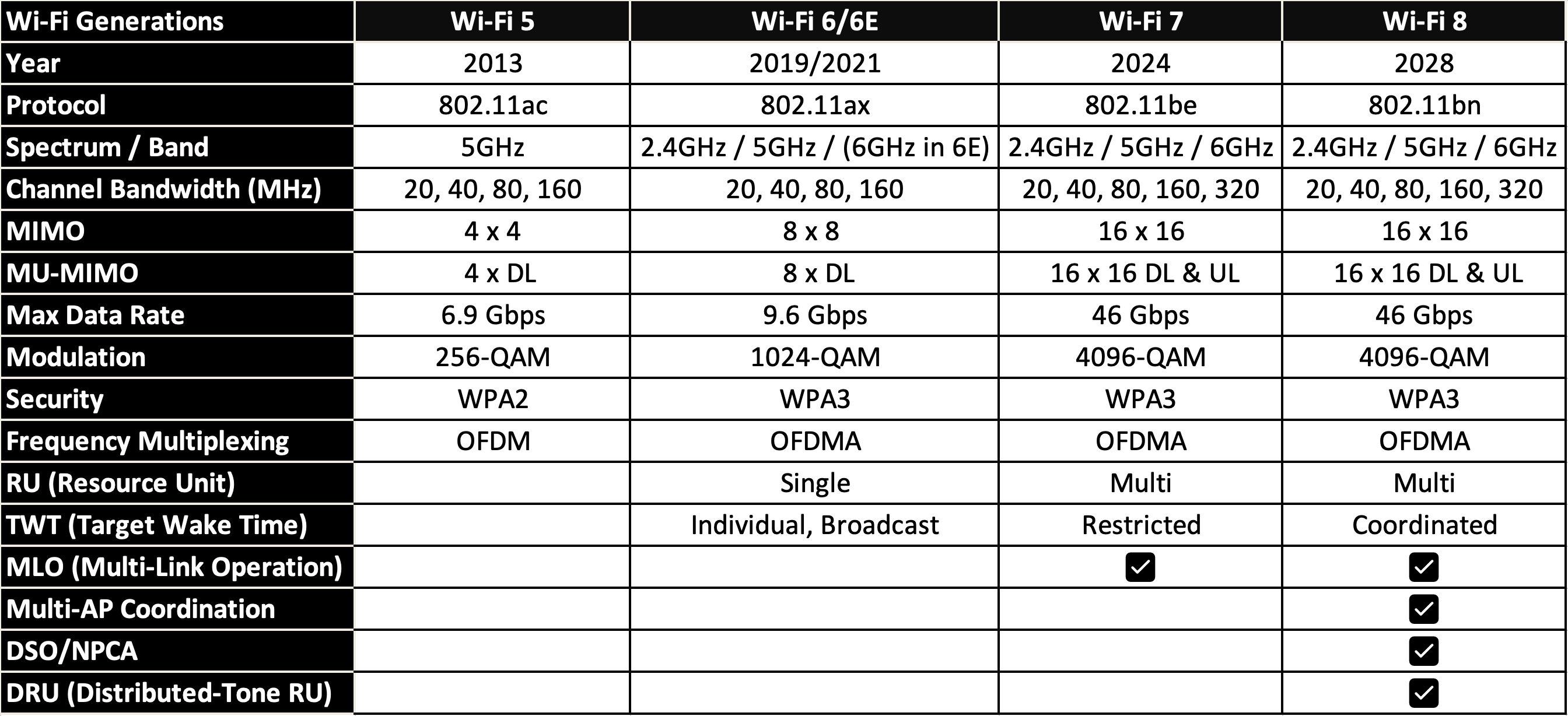
Wi-Fi is a wireleless networking technology that enables devices to connect to a network or the Internet without wires or cables using radio waves instead. The IEEE 802.11 (802.11 b,a,g,n,ac,ax,be,bn) is the standard for the Wi-Fi networks. It defines how the devices such as access points and stations (end point devices) communicate on different frequency bands, with varying bandwidths, speeds and features.
Wi-Fi operates in three frequency bands: 2.4GHz, 5GHz, and 6GHz:
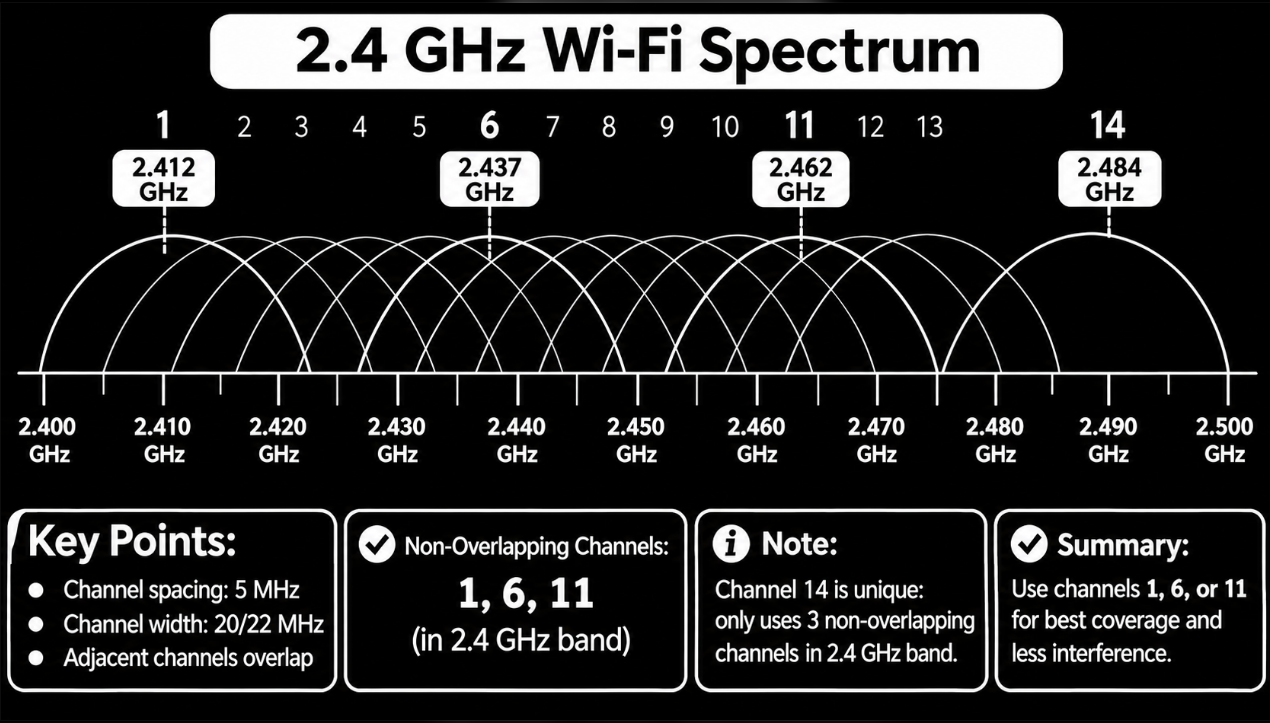
The 2.4GHz spectrum offers a longer range and better wall penetration than the 5GHz and 6GHz bands, but has more interference because it has only three (1, 6, 11) non-overlapping channels 20MHz wide under OFDM and 22MHz wide under DSSS. As a result, this band has been congested and overutilized for a quite some time now. Today, this band is typically used to support IoT devices that don't require much bandwidth/speed and because its larger coverage area.
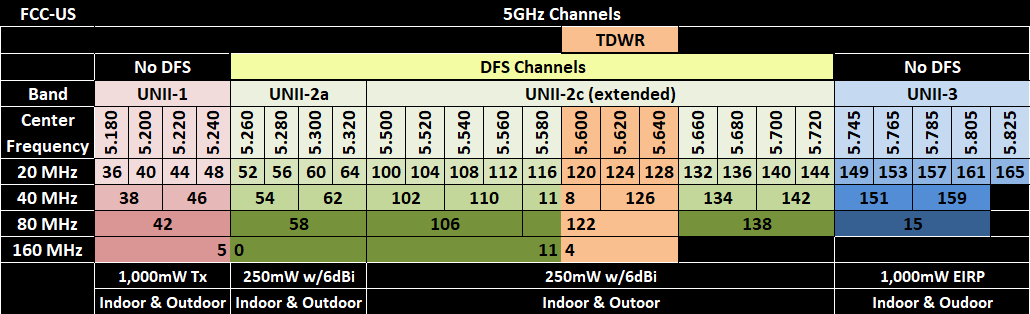
The 5GHz spectrum offers higher speeds, a shorter range, and less interference than the 2.4GHz band because it has 25 non-overalpping channles that can be bonded together up to 160MHz wide. This band is typically utilized for high-speed devices in schools, hotels, businesses, and homes.
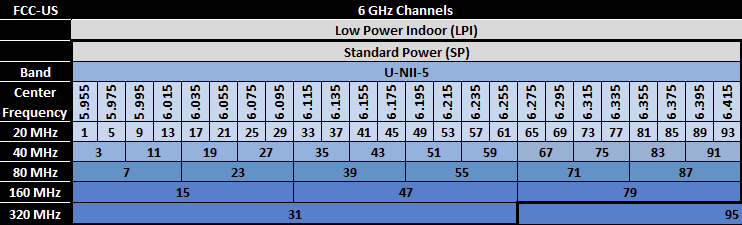
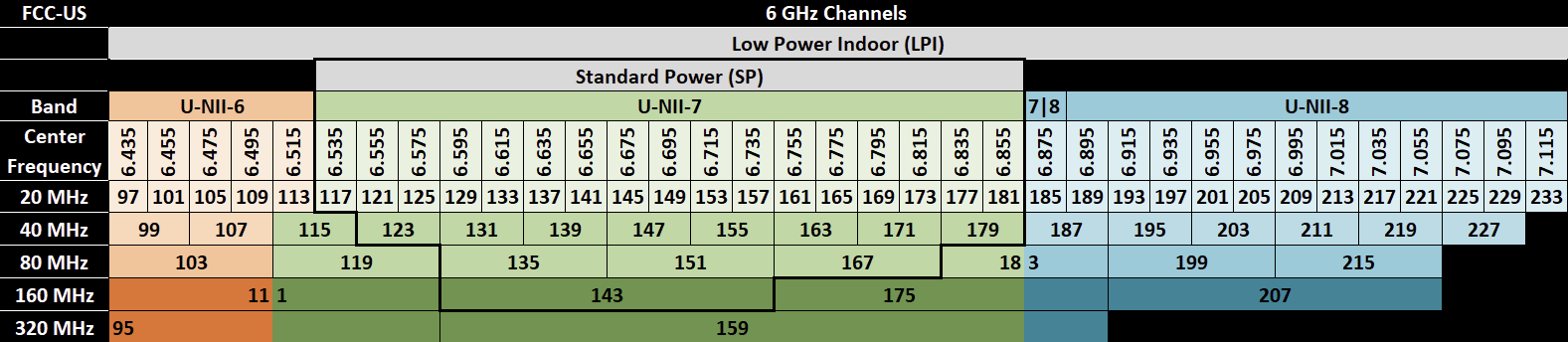
The 6GHz spectrum offers the highest speeds, the shortest range and the least interference amongs all the three Wi-Fi bands. It has 59 non-overlapping channels that can be bonded up to 320MHz wide. This is the newest Wi-Fi spectrum utilized in modern Wi-Fi 6E and Wi-Fi 7 devices in high density environments such as school campuses, business offices, airports, sporting events, and public venues. The relatively low interference of this band is because not all devices support the 6GHz band, and it is not as widely implementend as the 5GHz band yet. This applies to both the user devices (such as laptops, smartphones, and tablets) and the network infrastructure devices (access points).